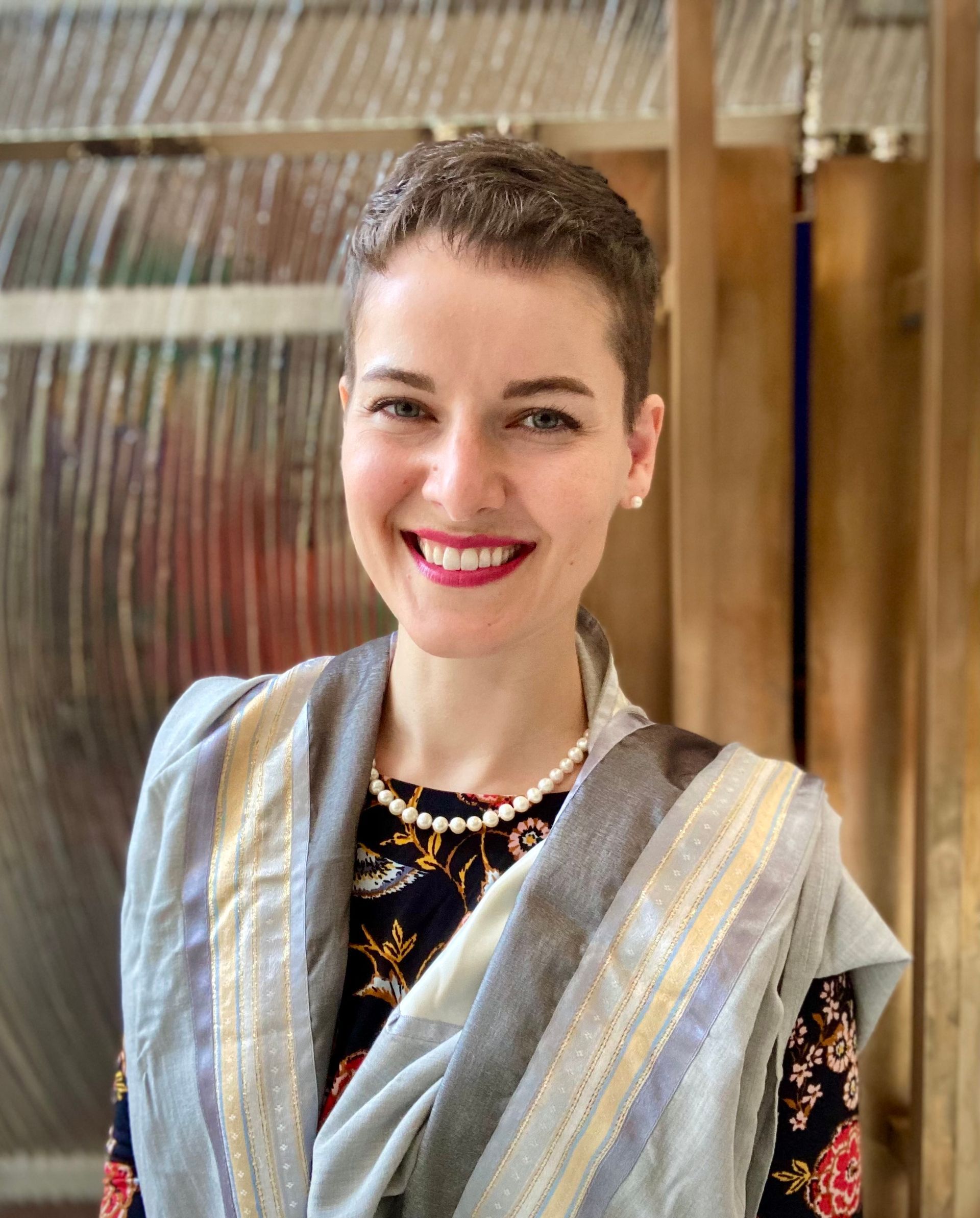
A headshot of Rabbi Braun

Rabbi Rachel Simmons
(they/she)


How to Contact Rabbi Simmons:

By phone - (207) 774-2649

By email - rabbisimmons@tbemaine.org

By Phone - (207) 774-2649

By email - rabbisimmons@tbemaine.org

Rabbi Rachel A. Simmons was ordained at the Ziegler School of Rabbinic Studies in Los Angeles, California, in spring 2022. From graduation until June 2025, they served as the associate rabbi of Congregation Har Shalom in Potomac, Maryland. As of July 2025, they serve as rabbi of Temple Beth El. 


Originally hailing from Alexandria, Virginia, Rabbi Simmons completed her undergraduate studies in 2009 with a distinction of magna cum laude from the College of William and Mary in Williamsburg, Virginia, with a dual degree in linguistics and German studies. Following the completion of her BA, she spent several years of her living abroad in Germany, Austria, Costa Rica, and Israel. She speaks German and Spanish, plays guitar and piano, and prior to entering seminary, she worked as a preschool teacher at the DC Jewish Community Center.


Rabbi Simmons finds great joy in leading prayer, providing pastoral care, and developing personal connections to Jewish rituals. She believes it is crucial to identify core communal values and help each other live by them as an embodiment of the Jewish teaching "And you shall love your neighbor as yourself." (Leviticus 19:18)


In her free time, you can find Rabbi Simmons doing yoga, painting, reading sci-fi and fantasy novels, cooking, and hanging out with her two rescue cats, Kohelet and Galilee.

Rabbi Simmons' Selected Writings

By Rachel Simmons March 31, 2026
Sermon given March 28, 2026. This week is special for several reasons. Of course, it’s special because Pesach is finally here. But for me personally, this week is special every year because it marks the anniversary of my conversion to Judaism. Each year when the anniversary rolls around-- always on the 13th of Nisan, so, yes, I always “Celebrate” by kashering my kitchen-- I think back to that day when I emerged from the mikveh and took my first steps in this world as a Jew. The Jewish story became my story. And it was fitting that I completed my conversion just hours before the beginning of Pesach, which is the holiday completely centered around telling and retelling our story. Now, because I am a convert and I didn’t have a formal bat mitzvah when I was 12 or 13, my rabbis at conversion suggested that I take this week’s Torah portion, Tzav, as “my” portion. Because this is the week that I received the yoke of the mitzvot upon myself as a Jewish adult, Tzav, in a way, will always have special meaning for me. And each year, I reread Tzav, I think about Passover, and I search for the lens that I would like to use at my seder that year. I look to see what jumps out to me, what lens I can use as I tell our people’s story for myself, right now, at this moment in time. And this year, as I read Tzav in preparation for Passover, what has jumped out to me is fire. Not just the role fire plays in the Passover story-- and it does play a dramatic role. Over the course of the book of Shemot and into Vayikra, fire makes many appearances. Moses sees fire burning but not consuming the bush from which he hears the voice of God; fire rains down with hail on the Egyptians; and God appears as a pillar of fire to protect and guide the Israelites in the desert. We also use fire to burn our chametz, kasher our kitchens, and scald our hard-boiled eggs. But fire plays another role in Parashat Tzav, a core, consistent, driving, energizing role. The very first verses of Tzav, in fact, focus specifically on sacrificial fire on the altar in the Mishkan. The first verse describes the ascent offering, which must remain on the altar-fire which burns all night, וְאֵ֥שׁ הַמִּזְבֵּ֖חַ תּ֥וּקַד בּֽוֹ: and the fire on the altar, the esh, will be burning. Continuously burning, our sages clarify. The fifth verse returns to this fire and how important it is, reiterating the same phrase and adding to it וְהָאֵ֨שׁ עַל־הַמִּזְבֵּ֤חַ תּֽוּקַד־בּוֹ֙ לֹ֣א תִכְבֶּ֔ה-- this fire on the altar, the esh, will be continuously burning and shall not go out! And in case we haven’t figured it out yet, verse 6 of parashat Tzav continues, reiterates yet again, and adds yet another important word, saying: אֵ֗שׁ תָּמִ֛יד תּוּקַ֥ד עַל־הַמִּזְבֵּ֖חַ לֹ֥א תִכְבֶּֽה: The always-fire on the altar will burn continuously and shall not go out! Now, we recently read about another light that did not go out-- the Ner Tamid, like the light we have here above our ark, a special lamp checked twice a day in the Tabernacle. But in parashat Tzav, we aren’t talking about the Ner Tamid-- the always lamp, as I think of it-- we’re talking about the Esh Tamid-- the always fire. In fact, Rashi clarifies that the Esh Tamid we’re talking about this week is, in fact, the esh that was used to light the Ner Tamid, and to light all other fires for ritual use. Therefore it was incredibly important that no matter what was going on in and around the Mishkan, or in and around the camp, this fire must be kept “Esh tamid”, an always-burning source of energy, light, heat, and life. When the Israelites were pursued in the wilderness by enemies-- the fire had to stay burning. When mana rained down from heavens-- the fire had to stay burning. When plagues struck-- the fire had to stay burning. When the Israelites brought their daily offerings, their sin offerings, their ascent offerings, their guilt offerings, their offerings of well-being-- the fire had to stay burning. When the Israelites crossed into the Promised Land, even-- the fire had to stay burning. Our ancestors were going through an immense amount of change and stress. They did not know what life would look like in 5, 10, 20 years. They were scared for their children. They were scared for themselves as a nation. And through it all, they carried with them a constantly burning, constantly guarded and nurtured, source of energy and warmth: they carried with them that esh tamid, that holy fire. As we said before, not only does this week’s Torah portion repeatedly tell us that the fire was burned continuously-- in fact, within the individual verses themselves, the words are quite redundant. Consider verse six again: אֵ֗שׁ תָּמִ֛יד תּוּקַ֥ד עַל־הַמִּזְבֵּ֖חַ לֹ֥א תִכְבֶּֽה: This means, “always fire was continuously burnt on the altar and not put out” If we’ve already said that it’s an always-fire, and that it’s continuously burning, why do we need to add “it will not be put out” at the end? It turns out that our sages, over the centuries, have asked the same question. Rashi clarifies for us, explaining that הַמְכַבֶּה אֵשׁ עַל הַמִּזְבֵּחַ עוֹבֵר בִּשְׁנֵי לָאוִין: One who puts out this always-fire is actually transgressing against TWO commandments: both the commandment to have a perpetual fire, AND the commandment to use that fire to fulfill other commandments, namely goodwill offerings. So. If we put out the fire, we are not only sinning by extinguishing it, but also sinning by prohibiting ourselves from doing the mitzvot which rely on the fire. And both parts of this verse, both mitzvot, are important for us today. I want to pause here and do a small exercise with all of you. We won’t have to break into groups or anything this time, I just want you to think, and then perhaps share, your answers to a question. The question is this: “which Jewish values/lessons most guide your personal choices, outlook, and philosophy?” Or, to rephrase: which core Jewish concepts guide your life? Let’s think about it for a minute. I’m going to offer you one or two of my favorites, and then I’d like to hear from you. (Pause for discussion, sharing/reading the following list):  Welcome the stranger. If I am not for myself, who will be? If I am only for myself, what am I? If not now, when? Tikkun olam. Justice, justice you shall pursue. Don’t distance yourself from the community. Every human is made btselem elohim, in the image of God. Every human is deserving of dignity. Give tzedakah. Save one life, save a whole world. Do justice and love mercy. What is hateful to you, do not do to others. Love your neighbor as yourself. Each of us, as people and as Jews, has core values that drive us. If we are a locomotive, these values are the coal, the steam, the spark--the fire, if you will-- in our engine that lets us move forward. These values that guide our choices are, in effect, a source of energy, a source of life, a source of strength as we move about in the world. They are our own esh tamid, our own fire that burns within us and sustains us and inspires us, no matter what is happening in the world. And right now, a LOT is happening in the world. And normally, this is when my conclusion would be a reminder that we are not alone, and that so many have gone before us from whom we can draw support. Our ancestors also knew upheaval in the wilderness. We can feel solidarity with them. But the thing is, we don’t just need solidarity right now. We need more. We need both parts of the commandment we zoomed in on this week in parashat Tzav: we need a fire within us that will not go out --that’s the values we just listed together-- and we need that fire to actively light something within us, something that helps us go out and be part of bringing this world closer to what we dream it could be. That is to say, we need both the comfortable aspects of fire-- the warmth, the coziness, the energy-- and the uncomfortable parts of fire, the burning, the part that drives us to bring about necessary change, and to help make this world a reflection of the values we hold most dear. As we prepare to enter into this Pesach season, this Passover, parashat Tzav reminds us that within us each, there is an Esh Tamid, a sacred forever flame, a flame made up of our core values, driving and guiding us. As we sit with our most central story this week, as we talk about the narrow places in our world today that are in need of healing, that sacred flame will glow within us. May our seders, and out conversations, fan that flame. May our resolutions and our ideas be ignited by that flame, and fueled into action. And finally, may the glow of our flame warm and inspire those around us in this world. Shabbat shalom, and may everyone have a meaningful Pesach.
By Rachel Simmons March 26, 2026
Sermon given March 21, 2026. Shabbat shalom, everybody. I’d actually like to start out with a bit of a content notice today: this sermon will talk about blood, and sacrifice, and also about war and other widespread violence and the effects of the trauma of war and violence cause on soldiers and civilians alike. It’s going to be a bit of a heavy sermon. I’d also like to break with my usual practice, and let you know ahead of time what my thesis is for this sermon. I’m doing this because I’m not trying to shock anyone or give anyone emotional whiplash. My thesis is that while we modern Jews often distance ourselves from the bloody sacrificial system described in the Torah, it is actually more similar to our modern lives than we would like to admit. Furthermore, I think we can and should learn an important lesson from this week’s Torah portion about ownership of and agency over sacrifices. My goal is for us to truly consider the violence done in our names that we support and tolerate in modern times, through the lens of biblical sacrifice. So, here goes. This week, we dive into the book of Leviticus. Leviticus is challenging for many reasons, and the Torah portion we read today, parashat Vayikra, is no exception. Parashat Vayikra is graphic, outlining in detail the specifics of various blood sacrifices God required our ancestors to offer and how they were carried out and by whom. That meant we heard about entrails and burning fat and blood being dashed on the altar and more. The words and images of the physical sacrifice are vivid-- the colors, the scents, the smells portrayed in this portion are difficult to stomach, and the death being inflicted upon animal after animal by our ancestors can feel almost impossible to identify with in a sympathetic way. Especially for those of us like me who are big animal lovers, this sort of parasha can hurt. Beyond the blood being spilled, we can also imagine the moral and emotional sacrifice that was required of the priests, the ones who had to do so much of the killing and blood-dashing. The priests themselves had to make immense sacrifices of the soul in order to facilitate the physical sacrifices of the animals. And that would have been an extremely difficult thing to experience on a regular basis. I do think it is significant that in our parashah, God commands that each Israelite bringing an offering not only show up at the appropriate time with the appropriate animal, but also demonstrate ownership and intention of the slaughter that is about to happen in their name. The Torah says that after bringing a choice animal to offer at the Tent of Meeting: וְסָמַ֣ךְ יָד֔וֹ עַ֖ל רֹ֣אשׁ הָעֹלָ֑ה וְנִרְצָ֥ה ל֖וֹ לְכַפֵּ֥ר עָלָֽיו׃ “You shall lay a hand upon the head of the animal for the offering, that it may be acceptable in your behalf, in expiation for you.” Only after the Israelite had laid their hands on the head of the animal, and felt its warmth and pulse under their palms, only then could the animal be slaughtered by the priests-- only after the owner of the animal had understood the significance of the bloodshed about to happen. And that’s tough to stomach for us. As I mentioned at the beginning of this sermon, I think there is a tendency among us modern Jews to respond to the ancient practice of blood sacrifice by distancing ourselves from it. We explain that things were different “back then”, and that societies functioned in a different way thousands of years ago than they do now. We reassure ourselves by saying that blood sacrifice was widespread in the ancient world. And we also remember that as Judaism evolved, especially after the destruction of the second Temple, our sages ultimately steered us away from killing animals and instead towards a pattern of regular prayer and ritual corresponding to the schedule of the Temple’s slaughter of animals so long ago. We no longer teach our children that God is commanding us, personally, to kill animals the way our ancestors were commanded. Gone is the required emotional sacrifice of the priests, and gone is the required physical sacrifice of the cows, the lambs, the doves, the many creatures named in our Torah. However, although our tradition has indeed evolved to the point that we no longer teach that God commands us to offer blood sacrifices, it would be false to say that the sacrificial system is entirely foreign to us. Today, it’s just that other forces in our lives demand sacrifice, including blood sacrifice-- and the consequences for us, both physical and emotional, and just as real as they were for our ancestors. And because of this, I believe it would be beneficial for us to explore the ways in which our current lives do, in fact, mirror and parallel the sacrificial practices outlined in parashat Vayikra. To do this, let’s first try to put ourselves in the mindset of our ancestors, thousands of years ago, in the desert-- and then compare it to ourselves, today. Our ancestors had fled Egypt with only what they could carry, taking their livestock with them. This must have been exhilarating and terrifying. Wandering longterm in the wilderness, they relied on manna from heaven, water from divinely appearing wells, their faith in God, and in their own ingenuity and teamwork to survive. I imagine that such an existence would have been both a huge relief, after slavery in Egypt, and also utterly exhausting. There would have been no sense of security at all, which explains why it was so crucial for the people to have trust in God. This reminder of how insecure Bnai Yisrael must have felt helps us to also understand how they could have decided to build a Golden Calf when Moses disappeared up the mountain for 40 days. This insecurity can also illustrate for us a bit of why our ancestors were willing to go through the bloody, emotional process of animal sacrifices. Livestock would have been among the most prized possessions of any Israelite. Livestock were a source of renewable food, milk, leather, wool, eggs, transport, and more. Given how precious livestock would have been, God’s command that the Israelites sacrifice their animals must have deeply impacted the lives of those making the sacrifice. Imagine having only what you could carry, and yet still being willing to give up one of your most prized possessions just for the sake of God. That speaks volumes to how much the Israelites were willing to go through for safety-- and for their faith. They made immense physical and emotional sacrifices, both because they were commanded to, and because they believed in something greater than themselves. When we compare and contrast their experience with our own, we see a multitude of differences-- but also key similarities. Yes, we now live in a world with modern conveniences, and with prayer services instead of Temple sacrifice and pilgrimage. But we also know what it is like to live in real fear: -Fear of terrorism -Fear of antisemitism -Fear of world leaders with dangerous motives having access to nuclear weapons -Fear of losing our civil rights And more. We know, like our ancestors did, what it is like to yearn for a sense of safety. And, as a society and as individuals, we are having blood spilled in the name of our security and our way of life-- soldiers, protesters, detainees, immigrants, police officers, and more. This means that today, we still have to ask ourselves the same difficult questions our ancestors did, questions like: What are we willing to give up, for a world of safety? What-- and more painfully, whom-- are we willing to sacrifice, to see the future come about that we are hoping for? What physical injuries-- and what moral injuries-- are we willing to suffer, or have our children suffer, in the name of something greater than ourselves? And which causes do we feel strongly enough about to ask our fellow citizens of this country and this world to lay down their lives for? These are not theoretical questions. Ours is a world where bombs are actively falling in the name of international security and safety and where malicious actors force civilians in the path of tanks and shells in the name of dangerous ideologies. In government rooms and bunkers, and around dinner tables, difficult conversations are happening: How many lives are we willing to sacrifice in the name of our cause? Which lives are we willing to sacrifice? But what often goes unsaid is the other part-- What emotional sacrifice does this require of us, and what emotional sacrifice can we, and our children, bear? What moral injury is being caused to those pulling the trigger, or clicking the button, that brings death to strangers on the other side of the world, or to the person right in front of us? Just like the priests, whose emotional sacrifice was having to take life after life of animals, how many soldiers will have to be haunted for the rest of their days because of the human lives they have had to take? As Golda Meir famously said in regards to those who wish Israel harm, “We can forgive them for killing our children. But we cannot forgive them for forcing us to kill their children.” She was alluding, of course, to the fact that the trauma of having to spill blood leaves devastating and long-lasting effects on those who have done so. Thousands of years ago, God commanded the Israelites to dash blood on the altar. Human governments and human political philosophies and human conscience now command similar dashing of blood-- but it is not animals being killed in the name of something bigger than ourselves, but rather our fellow humans. The sacrifice of war and civil unrest is real. There are those in this community who have served and know the pain of violence firsthand. There are those in our community who have lost loved ones in combat. And this, too, is a real sacrifice, in the name of our way of life, in the name of ideals bigger than ourselves. There is not a literal altar in this exchange, but blood is being dashed onto this Earth regardless. And like the sacrifices in our Torah portion this week, the dashed blood of soldiers and civilians in war sends a message to God, and to the world. If the smoke from sacrifices thousands of years ago reached God, so too must the smoke from a bomb, from a drone strike, or even from a single gunshoty. The question we must ask ourselves is: does our smoke also cause a re’akh nikhoakh, a pleasing smell, to God? Now, I am not one who believes that violence is always wrong. I come from a family where relatives have served in every generation back to the war of 1812, including both of my parents, who were commissioned officers in the United States Air Force. The Jewish people also know very well that at times in our history there have risen individuals capable of horrendous evil--including Pharoah, Amalek, Hitler, and more-- who needed to be stopped, sometimes by force. This is not a sermon condemning all sacrifices, or saying that blood should never be shed in the name of a worthwhile cause. But it is a sermon suggesting that there is less distance between our world and the sacrificial world of our ancestors than we might like to think. And, this sermon is also suggesting that not only is it acceptable for nations and individuals ask ourselves “when is it justified to require moral or physical sacrifice?”-- but rather, it is essential that we ask this question, and that we be cognizant of the literal sacrifices we are requiring of the most vulnerable members of our society, who in this country are disproportionately the ones sent into the line of fire. Regardless of how each of us may feel about the conflicts around the globe today, or the ongoing civil struggles here at home, what is consistently true is that real sacrifice is happening, right here on this world, right now. Real blood is being dashed on the altar. But it is also true that our tradition, and our Torah portion this week, tell us two things: first, that there are, indeed, causes that are worth making sacrifices for, and second, that we must be intentional when we decide which causes are worth sacrificing for. Just like the Israelite in our Torah portion today, who had to put his hands directly onto the head of the unblemished animal and look into its eyes moments before it was killed, we cannot look away from what is happening in our world, and what is happening in our name. We cannot pretend that it has nothing to do with us, because it is so far away. Though we may wish that sacrifice was a thing of the past, the reality is much murkier. I believe we still have what to learn from our ancestors and their personal ownership of what they were willing to go through, and give up, in the name of safety, security, and faith. And I believe we owe it to ourselves, and to each other, to acknowledge what we are, and what we aren’t, willing to sacrifice, in the name of the same things. Shabbat shalom.
By Rachel Simmons March 5, 2026
Sermon given February 28, 2026. Thousands of years ago, there lived a young woman named Timna. The Talmud teaches that Timna was “the daughter of kings”. She came from a family of great stature and wealth, and she knew from her youth that she wanted to be close to power. However, she was not Jewish. So it was that when she saw how God was favoring the Jews, protecting them and giving them rich harvests and safe passage, that she approached the Jewish elders and stated her desire to convert and to become one with the Jewish people. Unlike with our ancestor Ruth, whose story we will read and study on Shavuot, Timna’s attempt at joining B’nai Yisrael did not go smoothly. In Sanhedrin 99b, the Talmud describes what happens next in Timna’s quest to convert: “She came before Abraham, Isaac, and Jacob, and they did not accept her. So, She went and became a concubine of Eliphaz, son of Esau, saying: It is preferable to be a maidservant for this nation (that is, the Jews), than be a noblewoman for another nation.” Timna’s story didn’t end there, however. Despite not being allowed to join the Jewish people, she was in fact destined to be the matriarch of a nation we know all too well. Because the Talmud continues: “Ultimately, Amalek, son of Eliphaz, emerged from Timna, and Amalek’s tribe afflicted the Jewish people. What is the reason that the Jewish people were made to suffer at the hand of Amalek? It is due to the fact that they should not have rejected her when she sought to convert.” Wow. That is a striking and honestly quite surprising take on the evil deeds of Amalek. It does not feel comfortable to read. At first glance, from this story, it looks like our Talmud is stating that Timna’s treatment by the Jewish leaders augmented or perhaps even inspired the evil actions of her son. But why in the world would our tradition suggest that there could ever be any justification for the horrors committed by Amalek? Why in the world would the Talmud suggest that our ancestors somehow shared in the blame for the violence they endured? This weekend we are observing Shabbat Zachor, the Shabbat of Remembering, a special annual Shabbat where we depart from our normally-scheduled Torah reading in Exodus and insert a maftir aliyah from the book of Deuteronomy. This maftir includes the command: זָכ֕וֹר אֵ֛ת אֲשֶׁר־עָשָׂ֥ה לְךָ֖ עֲמָלֵ֑ק בַּדֶּ֖רֶךְ בְּצֵֽאתְכֶ֥ם מִמִּצְרָֽיִם: Remember what Amalek did to you on the way out of Egypt! This verse reminds us of our obligation not to forget Amalek’s uniquely intense and poisonous hatred of our people. Traditionally, when we discuss this commandment, we focus in on the Ramban’s interpretation of this commandment, who says: “you are not to forget what Amalek did to us until we blot out his remembrance from under the heavens”. And yet, the verses immediately preceding the commandment to remember Amalek in Deuteronomy are actually full of a discussion not of Amalek but rather of the importance of Jews using fair weights and measures in commerce. This juxtaposition of weights, measures, and Amalek leads our commentator Rashi to conclude that the commandment to remember Amalek is mentioned in this specific context in order to teach us that “If you cheat with weights and measures, be concerned that the enemy will be incited to attack you. “ Wait. What are we supposed to do with this? Why would both Rashi AND the Talmud suggest that Amalek’s attack on B’nai Yisrael was somehow a punishment for Jewish sins? This special reading about Amalek on Shabbat Zachor always occurs the weekend before Purim, which is a holiday commemorating yet another attempted slaughter of the Jews by a man traditionally thought to be a relative of Amalek-- Haman. The Purim story presents us with a story that, as we teach it to our children each year, follows a pretty black-and-white setup. An evil man, Haman, plots to murder the Jews. A proud Jew, Esther, bravely resists him and saves her people with the help of her uncle, Mordechai. Esther and Mordechai are good, Haman is bad. And yet-- it is at Purim that the Talmud tells us to drink “ad d’lo yada bain arur haman l’baruch mordechai”, until we can’t tell the difference between the cursed Haman and the blessed Mordechai. Until we can’t tell the difference between good and evil. This means that it is specifically here, this week, leading up to Purim, that our tradition calls on us to imagine a blurring of the lines we had taken for granted, a blurring of our perception, a blurring of our certainties. Our tradition is not asking us to throw out our convictions or morals, but rather, to examine them so closely that the details begin to blur. And this blurring is not comfortable, and it is a real challenge, like when we hold a magnifying glass up to a leaf-- but just like holding up a magnifying glass, the process can reveal new lessons we wouldn’t have seen from afar. Purim reminds us that sometimes blurring, paradoxically, can remind us of moral clarity. And it is exactly this kind process that Rashi and the rabbis of the Talmud are leaning into when they explore the blurring of boundaries between those who embrace doing wrong, like Haman, and those who strive to do right, like Mordechai, or when they analyze the “why” behind Amalek’s hatred, instead of simply condemning it. They want to go further than simply condemning evil. They blame Amalek for the evil he commits, yes, as we always must call out evil actions-- but they also challenge us to dig deeper and examine how all of the parts of the world, both those we can affect and those we cannot, work together in any given moment to lead humanity either closer to chesed, to lovingkindness… or closer to sinat chinam, to baseless hatred. These difficult commentaries are acknowledging that as Jews we are not allowed to even pretend that we live in a moral vacuum, or to even entertain the idea that we might be powerless in the face of hate. We are all, always and in all of the ways, connected, and we, too, make choices that impact the world. Other sources follow similar thought processes. The Mishna teaches us to judge every person “lchaf zchut”, according to his merits, as opposed to his faults-- but never forgetting his faults. Then, Rebbe Nachman expands on this line, saying it applies “afilu mi she’hu rasha gamor”, even for someone who is bad THROUGH AND THROUGH--that in that extreme case, you must still search for goodness within him. And the Ba’al Shem Tov went even further, saying “Your fellow is your mirror… should you look upon your fellow and see a blemish, it is your own imperfection that you are encountering-- you are being shown what it is that you must correct within yourself.” He writes further, “We must wipe Amalek out of our hearts whenever—and wherever—he attacks.” But wait. Wipe Amalek out of our hearts? Yowch! These words are tough for us, who have been victimized by hatred over and over again throughout history, to read. Because we know, for certain, that there is no blemish within us that could ever justify the attacks on the weakest members of B’nai Yisrael by Amalek, or that could justify the attempt at genocide by Haman. There is no legitimate excuse for any of the pogroms or campaigns of hatred against Jews throughout history, no matter how much antisemites might blame us for their own actions. So, we are back to our original question. Why in the world does the story about Timna in the Talmud seem to suggest otherwise at first glance? Why does Rashi’s commentary do the same? What about Rebbe Nachman’s call to look for a speck of good even in the worst humans, or the Ba’al Shem Tov’s reminder that we do indeed tend to see our own faults reflected in others? How do we reconcile their words with the commandment to remember Amalek’s evil? What is the ultimate takeaway that our tradition is asking us to remember, on this Shabbat Zachor? Well. I can’t believe that our sages are truly saying that we are at fault for the evil that befalls us. That is a non-starter for me. But I can believe that they are saying that just because evil has befallen us, we are NOT off the hook for the consequences of our own actions and choices. To the contrary: our painful experiences of having evil done to us make it all the more important that we commit, again and again, to building a better world, a world of intentional, radical compassion, one choice at a time. What we have to remember, on this Shabbat Zachor, on this Shabbat of Remembrance, is, in fact, that we always have power, and always have the agency, to make a real difference in this world. Because we know what will happen, and we know the pain that will befall others and ourselves, if we don’t. Our sages want us to remember that even when we feel helpless, we are not. They aren’t trying to tell us that we are to blame for others’ hatred against us: they are trying to remind us of our own strength, a strength that no amount of antisemitism can ever take away from us. Our sages knew that the moment we give up ownership of the consequences of our own choices and actions, we have given up our belief that we will ever be able to heal this world. And they want us to believe. They knew that the moment we lose the ability to look for a remnant humanity in the other, even a rasha gamur, we lose sight of the humanity in ourselves. And they did not want us to lose sight of our humanity. They knew that the moment we forget that we can -- and do-- direct the course of the world in a real way for better or for worse each day, even in the face of horror, we have ceased to be partners in bringing about a better world-to-come. As we approach Purim, the song goes: Mi she’nichnas Adar, marbim b’simcha-- from the time the month of Adar begins, we increase in joy. Shabbat Zachor calls on us not only to increase our joy, but to increase our faith in ourselves, our faith that we can still enact real change, and still bring about real goodness and compassion, in a world that knows real evil all too well. We just have to remember our power. Shabbat shalom.
By Rachel Simmons February 19, 2026
Sermon given February 14, 2026 Shabbat shalom, everybody. Last week, we stood during the Torah service and listened, just as our ancestors did so long ago at Sinai, to aseret hadibrot, to the Ten Commandments which our tradition teaches us that God gave Moses at Sinai. We stood, as we do each year, not only because the Ten Commandments are so important, and because receiving them was a significant milestone for us as a people, but also because the sages urge us to connect personally to the Sinai experience, not only to imagine what it would have felt like to have been there, but to believe that on some soulful level, in some shape or form, each of us WAS, indeed, present. It’s a dramatic story, and it can be a powerful experience to identify with what our ancestors must have gone through. Thunder crashes, the Torah tells us, the Earth shakes, lightning struck. I imagine that the people shook, too, from fear and wonder. I know that I, for one, have experienced earthquakes, seen volcanoes and forest fires and tropical storms, and I can definitely remember the awe I felt in witnessing those events-- awe in all senses of the word. I imagine that many of you, similarly, have lived through natural phenomena like this, and can also recall how it felt to have the world heaving and howling around you. We can feel this, personally. But the more challenging part, for many of us, isn’t imagining what it would have been like in a sensory fashion, to be standing at Sinai. Instead, in 2026, it’s feeling truly and individually commanded that’s more difficult for us. Especially in an age where personal liberty is so central to our societal discourse, it can be difficult for us to feel a sense of personal connection to the rules given to our ancestors thousands of years ago. Feelings-- sure. Laws? Not so much. We see this play out in the data. The most recent Pew study of American Jewish practice shows that while 70% of American Jews connect to our tradition by regularly or semi-regularly enjoying Jewish cuisine such as latkes and Kugel, neither of which are commanded in the Torah, only 17% keep kosher to any level at home, including not eating shellfish or pork, which is indeed commanded in the Torah. Similarly, while approximately 60% of American Jews have attended a Jewish lifecycle event such as B’nai Mitzvah in the year prior to the survey, only 20% of American Jews regularly mark Shabbat in a way that is meaningful to them-- a central Torah commandment, indeed, in the “Ten Ten.” This bifurcated modern diaspora Jewish reality hits us especially hard in a week like this, where we read parashat Mishpatim immediately on the heels of the Ten Commandments. Instead of getting a break from receiving laws, our Torah doubles down in parashat Mishpatim. The word “Mishpatim” literally means “laws” or “rules”, and it sure lives up to its name. וְאֵ֙לֶּה֙ הַמִּשְׁפָּטִ֔ים אֲשֶׁ֥ר תָּשִׂ֖ים לִפְנֵיהֶֽם׃ God says to Moses. “These are the laws you shall set before the Israelites.” And then, over the course of the parasha, we are told not ten, not twenty, but 53 separate mitzvot, or commandments, that our ancestors were expected to follow. (Fun fact: this actually isn’t the portion with the MOST mitzvot. That honor goes to Ki Teitzei, in the book of Deuteronomy, with 74 commandments in one Torah portion, as Moses recollects all of his teachings to our ancestors.) So. I don’t know how any of you are feeling, after reading that many rules-- and we didn’t even go through all of them this week, because of the triennial cycle!-- but I’m willing to bet that for a lot of us in this room or online, there are some rules in this particular Torah portion that we don’t have a personal relationship with, and that perhaps, we not only struggle to connect with, but think don’t apply to us now, thousands of years later. So what I’d like to do today is share with you my favorite mitzvah. My personal favorite, the one that I have a special relationship with, and it’s from this week’s Torah portion. I want to share my favorite mitzvah with you because it is personal to me, and because I want to encourage all of us, no matter our age, no matter our connection to the Torah, to try and engage in a real way with the words in this text, and to ask ourselves what these words could mean for us on a personal level, today. Now. This mitzvah is my favorite. I’m not saying it’s the most important mitzvah-- this isn’t the Ten Commandments, nor is it the portion with Love Your Neighbor As Yourself. It’s not even the mitzvah to treat strangers well, because we ourselves were strangers in Egypt-- a commandment which is, indeed, in this week’s portion. No-- it’s a different mitzvah. And before I share with you which one it is, I need to tell you a quick story. Once upon a time, there was a non-Jew named Rachel. Spoiler alert: that was me. I had started learning about Judaism, and started learning Hebrew, and was in the midst, in fact, of converting and joining the Jewish people-- binding my fate, permanently, in with this sacred tradition. And after many months of study, there were so many feelings that I had, approaching the end of my conversion journey. There was joy, there were nerves, there was impatience, there was eagerness. There was, indeed, a feeling of loss at some of what I was giving up to become a Jew: some of the rituals I associated with home, and family, and childhood. There was also excitement at the many rituals I was gaining, and the Jewish mishpacha I was joining. What I didn’t anticipate, though, was to feel disappointment at the conversion rituals being different for people with different bodies. I have all kinds of thoughts and feelings about brit milah-- about circumcision-- but that is not the focus of today’s sermon. The fact is simply that converts to Judaism with bodies like mine are not offered a traditional physical way to mark the transition into Am Yisrael. Though all converts go to mikveh, which is a physical process, part of the beauty of mikveh is that it is water, which both nurtures us and can be washed away. It doesn’t leave a mark, or even the memory of a sensation. And so, I went in search of a more permanent, lasting physical way to honor that moment of holy growth and belonging. I talked to Rabbis, I looked through books, I consulted with Rav Google, and ultimately, I found the answer I needed in the form of a mitzvah from this week’s parashah. וְאִם־אָמֹ֤ר יֹאמַר֙ הָעֶ֔בֶד אָהַ֙בְתִּי֙ אֶת־אֲדֹנִ֔י אֶת־אִשְׁתִּ֖י וְאֶת־בָּנָ֑י לֹ֥א אֵצֵ֖א חׇפְשִֽׁי׃ וְהִגִּישׁ֤וֹ אֲדֹנָיו֙ אֶל־הָ֣אֱלֹהִ֔ים וְהִגִּישׁוֹ֙ אֶל־הַדֶּ֔לֶת א֖וֹ אֶל־הַמְּזוּזָ֑ה וְרָצַ֨ע אֲדֹנָ֤יו אֶת־אׇזְנוֹ֙ בַּמַּרְצֵ֔עַ וַעֲבָד֖וֹ לְעֹלָֽם׃ “And if a slave says, I love my master, I love my wife, I love my children, and I do not wish to go free, then his master shall bring him before God. And he will be brought to the door of his master’s home, and there his master will pierce his ear, and he shall remain in his master’s household for his entire life.” It was Rashi who later clarified that the ear in question was the right one. But the significance of specifically an ear piercing goes even deeper: our Midrash explains to us that not only must the slave who stays by choice be pierced, but specifically in the ear, in the organ that hears, in the body part we use when we say, “Shema Yisrael, Adonai Eloheinu, Adonai Ehad.” By piercing the slave’s ear, both the master and slave reaffirm the rules and commandments given at Sinai, and their own connection to them. They reaffirm that their choices, and their actions, are still bound by the same sacred covenant. Now. I don’t know if any of you have noticed that I have a permanent piercing in my right ear. It was not, in fact, a fashion statement when I decided to get this piercing. Instead, it was a religious statement-- a statement of religious responsibility-- a statement of promising, to God and to myself, that for the rest of my life, Judaism would be my home, and that I would actively engage with that home and make it my own. Getting that earring, and seeing it each day, provides me with a reminder of the life I want to lead, and of the sacred, ancient tradition without which I would not be who I am today. And that, then, is my favorite mitzvah. The slave who chooses to stay and gets an earring to show it. Is it a perfect mitzvah? No. I want to see a world where slavery doesn’t exist at all! But part of the beauty of engaging on a personal level with these mitzvot is that we can relate to them in a way that does, indeed, feel comfortable for us. And what’s comfortable for me about this commandment is the shared commitment by both the piercer and the piercee to creating, and building, a long-term home together. And, the fact that the choice, made by the slave with the option of freedom, was made out of a place of love-- as was my choice to become a Jew. That said, my story is my own, and we are a widely variable people, each with our own stories and sensibilities. But if this particular mitzvah doesn’t speak to you, I have good news-- there are 612 other mitzvot to wrestle with, to relate to, and to incorporate into your life in one way or another. No matter where you start, whether with a rule that feels right to you or a rule that bothers you, engaging with these ancient laws in an honest and personal way can lead to a deeper, closer connection to our tradition. Parashat Mishpatim, as we discussed earlier, begins with God saying to Moses: These are the laws you shall set before the Israelites.” Rashi reflects that, quote, “the Torah states “that you shall set before them” like a fully laid table with everything ready for eating.” Our Torah gives us these rules, these mishpatim; it offers them to us on a metaphorical platter. But it is up to us with our hungry hearts to reach out, as we would reach for food for physical sustenance, and to also prioritize the unique spiritual sustenance that can come from engaging with these commandments on a real-life level. The Torah, in all its glory, in all its messiness, in all its beauty, was not just given to our ancestors at Sinai. It was, and is, given to us. Today. But it is up to us to choose to receive-- and accept-- it as our own. Shabbat shalom. 
By Rachel Simmons February 5, 2026
Sermon given January 31, 2026 When I was little, I loved to read the Redwall books by Brian Jacques. I don’t know if any of you have read them, but they’re these adorable stories where the characters are all animals, not humans-- mice, beavers, rabbits, badgers, all kinds of fluffy critters. They’re the first chapter books I remember really getting pulled into as a child, and I remember the giddy feeling I would get each time I started nearing the end of the book, right as the big battle scene would arrive where the hero mouse was fighting the big bad weasel, and where you KNOW, as the reader, that the good guy is going to win. You just know, because that’s how it’s supposed to be. It felt so cozy to read those books and so reassuring to know that those cute little fluffy tiny mice could all band together and fight off the mean weasels attacking them. And then I grew up a little, and I read Harry Potter, and I grew up a little more, and I read Lord of the Rings, and so many other books, and of course, the same thing was true-- it’s literature 101-- the classic story arc is essentially as follows: You set the scene, you meet the characters, they have to face challenges, there’s a culmination or crisis, and then, it all resolves neatly and justice triumphs. It feels good, right? Similarly, every year when we get to this particular section of the Torah, I get all caught up in the drama of it all and that same kind of satisfying story arc that we tell and retell, both in shul and at our Passover seders. The story of the Exodus is our central narrative as a people, and it is truly an epic tale. Frankly, I’m surprised Peter Jackson hasn’t written a screenplay about it. (Or six screenplays.) The story of the Exodus has everything in it-- as we’ve discussed these past few weeks, it has villains who choose to do harm and it has heroes-- like Shifra and Puah-- who choose to be compassionate; it has underdogs and it has teamwork; it has supernatural amazement, it has moments where we aren’t sure that victory will be achieved-- moments of fear and despair--- and it has those who had been undermined finally escaping the clutches of the evil ruler who has been tormenting them for generations. It has a truly magnificent-- and also satisfying-- story arc, from slavery to freedom, from persecution to liberty, from self-doubt to self-actualization. Just like the books I read as a kid, the story we have been reading for the past few weeks may also feel a bit cozy to us as Jews, and satisfying, because we are so familiar with it and because it reminds us, every year, of the power of faith and community and the triumph of freedom over slavery. If we zoom out, we could also look at our entire Torah through this same literary lens and find yet another dramatic and satisfying story arc. Genesis starts with tohu va’vohu, literal darkness and void, then describes our sacred connection to the Divine and introduces us to the core ancestors we invoke in our prayers and whose imperfect humanity guides and inspires us; Exodus , which we are in right now, is our epic escape into the desert from Egypt; Leviticus , as I taught in my senior sermon during Rabbinical School, is the story of our truly beginning to grow as a civilization and develop rules, and norms, and transform from a lost group into a people; Numbers sees the first growing pains of said civilization; and Deuteronomy embodies our tradition of storytelling as Moses nears death, leadership is handed over, and our people prepare to finally enter the Promised Land, arriving at our destiny, standing at the edge of the Jordan. Now. Whether secular, or spiritual, all of these satisfying story arcs are important, whether we’re talking about novels and kids books or whether we are talking about our holiest stories. The satisfying arcs are crucial, in fact, not just because they feel good to read or learn or experience in our own lives, but because they provide our hearts and souls with positive reinforcement for the hard work that goes into fighting for our own freedom, fighting for our own destiny, and fighting for our own peace in our own world. WE NEED THAT NOURISHMENT. They remind us that we are not alone and that if we try hard enough, we too can stand up against the weasels, or the Voldemorts, or the Saurons, or the Pharaohs of our own time. It is important that we enjoy and revel in these stories and claim them as our own, and teach them to our children. But of course-- there is also a flipside to these satisfying story arcs. There is always a flipside, because something always happens next. Though we have reached one satisfying resolution, the journey is not over. We see this painful truth in this week’s Torah portion. Our parasha, B’shallach, enshrines the part of the Exodus story where Pharoah finally releases the Israelites, who escape to the Sea of Reeds and are then saved from the encroaching Egyptian army by a Divine miracle. On the other side, Miriam breaks out her timbrel and our ancestors dance and sing, O’zi, v’zimrat yah, va’yhi li l’yishua! God is my help and my strength and deliverance! That is supposed to be the satisfying end, right? We are free! But instead, as we see in this week’s parasha, our ancestors are almost immediately set upon and attacked by the most heinous of enemies, Amalek. As we say, out of the frying pan and into the fire. Like Pharaoh, who wanted to kill Israelite babies, Amalek targets the weakest members of the Israelites-- the young and old and infirm. He is another prime example, like Pharaoh, of the potential for humans to make harmful choices instead of compassionate ones. And this one-two punch of Pharaoh followed by Amalek carries with it a sobering lesson: מִלְחָמָ֥ה לַֽיהֹוָ֖ה בַּֽעֲמָלֵ֑ק מִדֹּ֖ר דֹּֽר: There will be a holy war against Amalek from generation to generation. Or, as we invoke in our Haggadot at Pesach, this is the lesson that in every generation-- at least once-- someone will rise up against us, to try and destroy us. Meaning that the sacred work, and the sacred journey, will actually never be completely over. True, lasting safety isn’t a sprint. It’s a long game. If we zoom out and look at the Torah as a whole, we can see evidence of the same painful lesson. Because, what happens on the other side of the Jordan, when our ancestors enter the Promised Land at the end of the book of Deuteronomy? Not peace. In fact, there’s a whole lot of violence, and unrest, and power changing hands again and again, and then our forebears were largely expelled into the Diaspora. Over centuries, while powers like Rome and the Ottoman Empire and Britain jostled for control of the Holy Land, Jews were trying to survive, and othered, separated, attacked, and often treated badly around the world. But we did not give up. The sacred journey, and the sacred work, continued throughout all of that back and forth and up and down. For generation after generation, Jews committed to keeping our tradition, and our people, alive, and our stories, and our values, alive. In the ghettos and the shtetls, they told each other the stories with satisfying story arcs, like the story of the Exodus, and like the story of the entire Torah, precisely because they themselves needed the same human nourishment to the injustices of their own times that we need today. They did not get to experience the satisfying perfect story arc ending, but they knew that by doing the sacred work, they were becoming part of a bigger arc-- part of the long game. In the 19th and 20th centuries, we saw another, modern Jewish story arc. The rise of nationalism and the horrors of the Shoah were followed by, in 1948, what was seen widely as a modern Jewish miracle. The current state of Israel was formed. Finally, there was a place Jews could go when other countries rejected us. It felt like we had arrived and re-realized our destiny, and it was satisfying. We even added a prayer for the State of Israel to our liturgy, calling its founding reishit tzmichat geulateinu, the beginning of the shoots, the growth, of our redemption. But we also know now, in 2026, without going into too much detail, that the sacred work was still not over, and the sacred journey was not over, even after the founding of the modern state of Israel. Because the minute the modern state of Israel was founded, it was attacked. Over the years, again and again. And as we know all too painfully after October 7th and the ensuing war, the modern state of Israel, in addition to its own growing pains internally, is also surrounded by countries that do not wish for peace, and by groups like Hamas and Hezbollah whose mission is stated to destroy Israel. מִדֹּ֖ר דֹּֽר: As our Torah portion said this week: from generation to generation, Israelis still have to fight for lasting safety. Even the return of the body of the final hostage this week, of Rani Gvili, zichrono l’vracha, though it brings to an end one horrible, horrible arc, does not mean we have arrived at a lasting peace. Lasting peace, too, is a long game. This means that WE, as Jews TODAY, understand, keenly, the lesson we say in our Haggadah. We know, keenly, what our ancestors learned in this week’s parashah, as they escaped from Pharoah only to come face-to-face with Amalek: the lesson that the sacred work never ends. The sacred journey never ends. As long as humans are human-- that is to say, as long as each of us has the power to either choose to be compassionate, or choose to do harm-- we are going to have to actively choose to do our part, no matter which part of the story of history we are born into, to help bring about a world that more permanently, and more sustainably, reflects the human and Jewish values we hold most dear. We each have to choose to commit to being part of the long game. I have spoken passionately these last few weeks about the many ways that we can each do our part and step up to make a difference in our larger world and in our immediate community. Specifically, as immigrants in Portland have been targeted in a more focused way over the last two weeks, members of TBE and the interfaith community in this city have come together and helped provide food, solidarity, prayer, funds, and more to these fellow humans, many of whom have already fled war-torn countries or lands where it was not safe to be themselves and raise their families. Every one of us, as human beings, has a choice, to either be part of contributing harm to the world or contributing to compassion. Pharaoh and Amalek had that choice, and they chose to do harm. But I have been incredibly moved by how the members of TBE have showed up this week and chosen to add to the compassion in the world in so many ways. Together we have given tzedakah, done countless works of gmilut chasadim, and been part of a deep action of tikkun olam, attempting to repair brokenness in our world. We have invoked our Torah, which reminds us of the story of the Exodus, and that we must “love the stranger, for you yourselves were strangers in Egypt.” In helping these new Mainers achieve more safety, sustenance, and justice, we helped bend the arc of their story towards what will hopefully, one day, be a satisfying ending. And at the same time, we, too, help bring ourselves, and our own story, closer to a similar place of resolution and justice-- both as Jews, and as part of the larger human family, and the larger arc we are all a part of. We received welcome news this past Thursday that the immediate danger is abating. This one, intense story arc of the past two weeks has, for the time being, reached a conclusion-- and that conclusion was brought on, in part, by the brave acts of this immediate community, and by the wider Portland community. But welcoming the stranger, like justice, and like sustainable peace, is also a long game. And so, in this moment of relief and reflection, as we read our Torah portion this week and are reminded both of Miriam’s joy at freedom and of Amalek’s evil immediately thereafter, I urge us all to do two things: 1. First, we need to celebrate all that we have done as a community to help bring about this relief, and enjoy the feeling that comes with the end of this smaller story arc. We made a difference, together. This community, both congregants and staff and lay leaders, donated thousands of dollars and donated many hours of volunteering and cooking and teaching and outreach to help our most vulnerable neighbors this week. And that made a difference. Relish that feeling, and take heart from it. We are not powerless. I am grateful to all of you, and to God, that I get to serve this incredible synagogue family. 2. But second, we have to simultaneously remember that this is not a sprint. This is a long game, and the clock is still going. I know we are tired. I know that, speaking purely for myself, there are moments of exhaustion where a part of me wishes for easy times, for “normalcy”, and wants to pretend that the pain of the wider country, and wider world, is something we are not a part of. But our history, and our sacred stories, remind us that this is not an option. As Jews, as Americans, as Mainers, as human beings-- we still have work to do. We cannot stop being proactive. We cannot stop opening our hearts. We cannot stop giving tzedakah, doing gmilut chasadim, and caring about tikkun olam. We cannot pretend that just because one Pharaoh surrenders, there will never be another Amalek. We are Jews. We know better. Whether we are talking about justice, about peace, or about welcoming the stranger: the sacred work, and the sacred journey, are not over. This is a long game. But I am so happy, as your rabbi, that if it has to be a long game, that I get to be on YOUR team. Shabbat shalom.
By Rachel Simmons January 29, 2026
Sermon given January 24, 2026 I thought long and hard about what to focus on in the sermon today, and I couldn’t land on one best choice. So, first, sure, let’s talk about the parasha. Let’s talk about parashat Bo, where we see the culmination of the plagues God sends to Egypt as signs that our ancestors, the Israelites, must be freed from their unjust captivity. Specifically, we can call our attention to the story of the plague of darkness: וַיֹּ֨אמֶר יְהֹוָ֜ה אֶל־מֹשֶׁ֗ה נְטֵ֤ה יָֽדְךָ֙ עַל־הַשָּׁמַ֔יִם וִ֥יהִי חֹ֖שֶׁךְ עַל־אֶ֣רֶץ מִצְרָ֑יִם וְיָמֵ֖שׁ חֹֽשֶׁךְ׃ And God said to Moses, put out your hand towards the heavens and a darkness will descend, a darkness that is tangible. The Midrash of Exodus Rabbah 14 explains that this tangible, touchable aspect of the darkness meant it was so thick, “of such a double character”, that it physically impacted everything around it. But I am certain that all of those exposed to such deep and penetrating emptiness would have surely been impacted emotionally. The devastation-- the loneliness-- the panic-- would have been profound. And I think there are those of us today, here in person or online, and certainly there are those sheltering in place in our city, scared to go to work, scared to go to school…. who have felt that way, this week-- felt like there was a darkness closing in, something impacting all aspects of our lives, thick, and heavy. I know that at moments, I have felt that way. Perhaps you have, too. Scripture teaches us that the only ones who were not enveloped by this darkness, and not surrounded by its tangible despair, were the ones who believed in something greater, the ones who maintained hope, the ones who wanted freedom-- that is to say, our ancestors, the Israelites. This is the first lesson that it is important to highlight in this sermon-- the fact that ours is a tradition of stubbornly nurturing light in the face of looming and penetrating darkness. But there are a few other stories I need to share with you today, too. First, a small yet agonizing story from our history as Jews and as Americans, one that it is important we never forget, immortalized in the words of Rabbi Joseph Telushkin, writing about one specific event during the Holocaust: “No instance better summarizes America’s and President Franklin Delano Roosevelt’s reaction to the Jewish situation than the fate of the SS St Louis, whose seemingly endless trip from Germany to North America and back became known as the ‘voyage of the damned.’ The St. Louis set sail from Germany in May 1939, some six months after Kristallnacht. Aboard were 937 Jews, almost all of whom held visas for Cuba. While en route, there was a change of government in Havana, and the new administration refused to honor the visas. For days, the St Louis remained docked in Havana’s harbor, as representatives of international Jewish organizations tried moral suasion, and then bribery, to influence Cuba’s leaders to admit the ship-- to no avail. American Jews likewise tried to influence their government to admit the refugees, and also had no success; the United States would not accept any of the Jews on the ship. Indeed, in 1989, I spoke to a survivor of the St Louis who told me that when the ship neared the territorial waters of Florida, the Coast Guard fired a warning shot in its direction. Hitler, meanwhile, was ecstatic. For all that world leaders publicly attacked antisemitism, they clearly did not want the Jews any more than he did. The St Louis finally started its tragic journey back to Germany. In the interim, several European countries, England, Belgium, Holland, and France, agreed to admit the passengers. Those fortunate enough to be admitted to England survived the war, but those who received visas for Belgium, Holland, and France lived securely only for a short time. By 1940, the Nazis had occupied all three countries: it can be surmised that most of the passengers on the voyage of the damned were murdered in Nazi concentration camps. The sheer pointlessness of these deaths was underscored by the survivor of the ship mentioned previously (she and her family had been admitted to England.) “We were so close to Havana we could see the city clearly”, she told me. That tantalizing and agonizing recollection undoubtedly accompanied many of the former St Louis passengers on their trips to the death camps.” This is the second important lesson to highlight in this sermon-- that in addition to being inheritors of a tradition that urges us to resist looming darkness, we are also descendants of people who have been targeted, rejected, chased, murdered, and tortured just for being who we are. We are a people made up of refugees, of asylum seekers, and we know, keenly, what it is like to be told in word and in action by the rest of the world that we are not worthy of the dignity of a life free from fear. And that painful inheritance can also be a source of immense power, and immense empathy, if we let it move us and shape our conscience, and then our actions. So now, it is time to move on to the third story of our sermon. After the story of the plague of darkness, thousands of years ago, and the story of the SS St Louis, less than a century ago, we move ahead to to this past week. A priest, a reverend, and a rabbi walked into a factory. But this was no joke. There was no punchline. In that factory, the three of us met with business leaders, workers, asylum seekers, and retired law enforcement. What took place was a secret and painful logistical discussion. Though all the workers were here legally, the factory had been notified that it might be a target for federal agents. Questions were asked that should not have to be asked, and answers were given that should never have to be given. At the end of the meeting, though, our mission as clergy was clear. The next day, the priest picked up a bright orange vest and handed it to me. “It’s an honor to give this to you, rabbi,” he said. “And it’s an honor to receive it from you, Father”, I replied. And then we joined our clergy partners, over half a dozen other members of the cloth, Catholic, Episcopalian, Quaker, UCC, and more, who had heeded our call. We stood in a line, with our backs to the factory, feeling with each Signal notification and unmarked SUV that sped by the weight of our sacred responsibility. Parked cars with masked agents appeared at the factory and the workers, dozens of asylum seekers and new immigrants, sheltered in place. I observed our line of bodies, singing songs of spirit and protest, shielding the bodies of the workers, the immigrants, the asylum seekers, who were hurrying behind us into and out of the factory, just trying to get home and back to their families without being attacked. Sometimes, especially that first night, they moved as close to the ground as they could, fully aware that there were individuals in cars nearby who wanted to kidnap them, divide their families, and worse. One of them had a member of their household taken. And every shift, my heart was broken wide open. And every shift, it was also filled with the immense bravery and courage and strength of these fellow humans, humans just trying to live, humans just trying to work and earn a living, humans just trying to be safe in a world that has rejected them. We are only privy to a fraction of what these new Mainers must be going through-- the fear, the stress, the secrets, the mistrust, the sense of being trapped and hunted-- but as Jews, we should be able to honor and understand it. And we do not have to know every detail of their lives to know that they are human beings, that they are deserving of the same dignity as every other person, and that our God commands us to love the stranger, for we ourselves know what it is like to be strangers.  As Jews, we do not get the luxury of pretending that evil does not exist in this world. We don’t get to pretend that humans can do evil. We don’t get the luxury of being bystanders. Because we were strangers in Egypt. Because we were targeted, and harmed, and killed, in Egypt. I know that I am not the only person in this room, or listening to this sermon online, whose heart has been broken again, and again, and again this week. I don’t often share the fact that part of why I became a member of the clergy was not a love of rules or hymns or challah, but rather because I have spent an inordinate amount of time thinking about mortality, and about how we each have one life to live on this Earth. Judaism’s insistence that we embrace both creative work (aka malacha) and also embrace intentionally moral, connection-nurturing actions (aka mitzvot) appeals to me for many reasons. One of these reasons is that Judaism gives me the tools, with each prayer and each command, to imbue my life with sanctity and to do my tiny party to help bring healing and love to this hurting world. I went to that parking lot, and that factory, and I sang and prayed and shielded those workers alongside my interfaith colleagues this week, because I know that I have a finite time on this Earth to try and help others, and I literally do not know how I could function if I did not at the least try contribute to being the solution or the help to fix even one tiny part of the immense brokenness which is around us. Mishna Sanhedrin teaches us that judges spoke to witnesses before they would testify in ancient cases, reminding them that with their words and actions, they had great power. They spoke, quote, “To teach…that whoever destroys one life is considered by the Torah as if he destroyed an entire world, and whoever saves one life is considered by the Torah as if he saved an entire world.” We can each help save an entire world, whether with our bodies, or our titles, or our homes, or our money, or our time, or our prayers, or our words, or something else. Each of us, in our own way. Every little bit matters. I want to speak from the bottom of my heart when I say how moved I have been, this week, to see the absolute outpouring of care and volunteering and donating and showing up and outreach and prayer that Temple Beth El and the greater Portland Interfaith Community have shown one another as our own looming darkness, our own tangible, touchable threat, has settled onto our streets. I want to specifically name how our incredible staff and lay leadership has pivoted, adapted, implemented new safety protocols, and had difficult conversations at all hours of the day, all while urging one another to remember to practice self-care and show ourselves grace. I want to thank the congregants who showed up to volunteer and teach and do jobs others had to drop to go and attend to urgent need. I’m here today less as your rabbi and more as a fellow human being and as a witness, this week, to some of the best and the worst that we as humans have to offer. We are in the thick of it, my friends, And we are not alone. We are never, ever, alone. This darkness that has descended is, indeed, tangible. It has grabbed our hearts and our neighbors. It threatens to overshadow our joy and our hope. But we are the descendants of a people that has insistently, stubbornly, and heroically insisted on responding to darkness with light, again and again throughout history. And now it is our time. It is our time to go out into the tangible darkness, and let our tangible love, and our tangible light, SHINE. Shabbat shalom.
Show More